Principles of Art History
What are the fundamental differences between classic and baroque art? Is there a pattern underlying the seemingly helter-skelter development of art in different cultures and at different times? What causes our entirely different reactions to precisely the same painting or to the same painter?
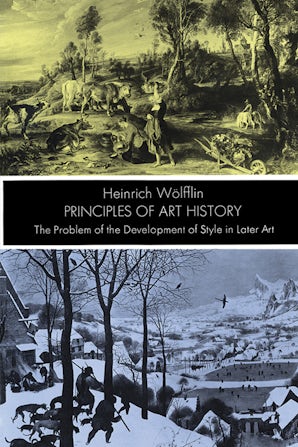
In this now-classic treatise, published originally in Germany in the early 1920s, Professor Wölfflin provides an objective set of criteria to answer these and related questions. Examining such factors as style, quality, and mode of representation in terms of five opposed dynamisms (the linear vs. painterly, plane vs. recession, closed vs. open form, multiplicity vs. unity, and clearness vs. unclearness), the author analyzes the work of 64 major artists, delving even into sculpture and architecture. 150 illustrations of the work of Botticelli, van Cleve, Durer, Holbein, Brueghel, Bouts, Hals, Rembrandt, Velasquez, Titian, Vermeer, and other major figures accompany Professor Wölfflin's brilliant contributions to the methodology of art criticism.
Whether you teach art, study it, or want to understand it purely for your own enjoyment, this epoch-making study will certainly increase your comprehension of and pleasure in the world's art heritage.
Original: $14.95
-70%$14.95
$4.48Product Information
Product Information
Shipping & Returns
Shipping & Returns
Description
What are the fundamental differences between classic and baroque art? Is there a pattern underlying the seemingly helter-skelter development of art in different cultures and at different times? What causes our entirely different reactions to precisely the same painting or to the same painter?
In this now-classic treatise, published originally in Germany in the early 1920s, Professor Wölfflin provides an objective set of criteria to answer these and related questions. Examining such factors as style, quality, and mode of representation in terms of five opposed dynamisms (the linear vs. painterly, plane vs. recession, closed vs. open form, multiplicity vs. unity, and clearness vs. unclearness), the author analyzes the work of 64 major artists, delving even into sculpture and architecture. 150 illustrations of the work of Botticelli, van Cleve, Durer, Holbein, Brueghel, Bouts, Hals, Rembrandt, Velasquez, Titian, Vermeer, and other major figures accompany Professor Wölfflin's brilliant contributions to the methodology of art criticism.
Whether you teach art, study it, or want to understand it purely for your own enjoyment, this epoch-making study will certainly increase your comprehension of and pleasure in the world's art heritage.